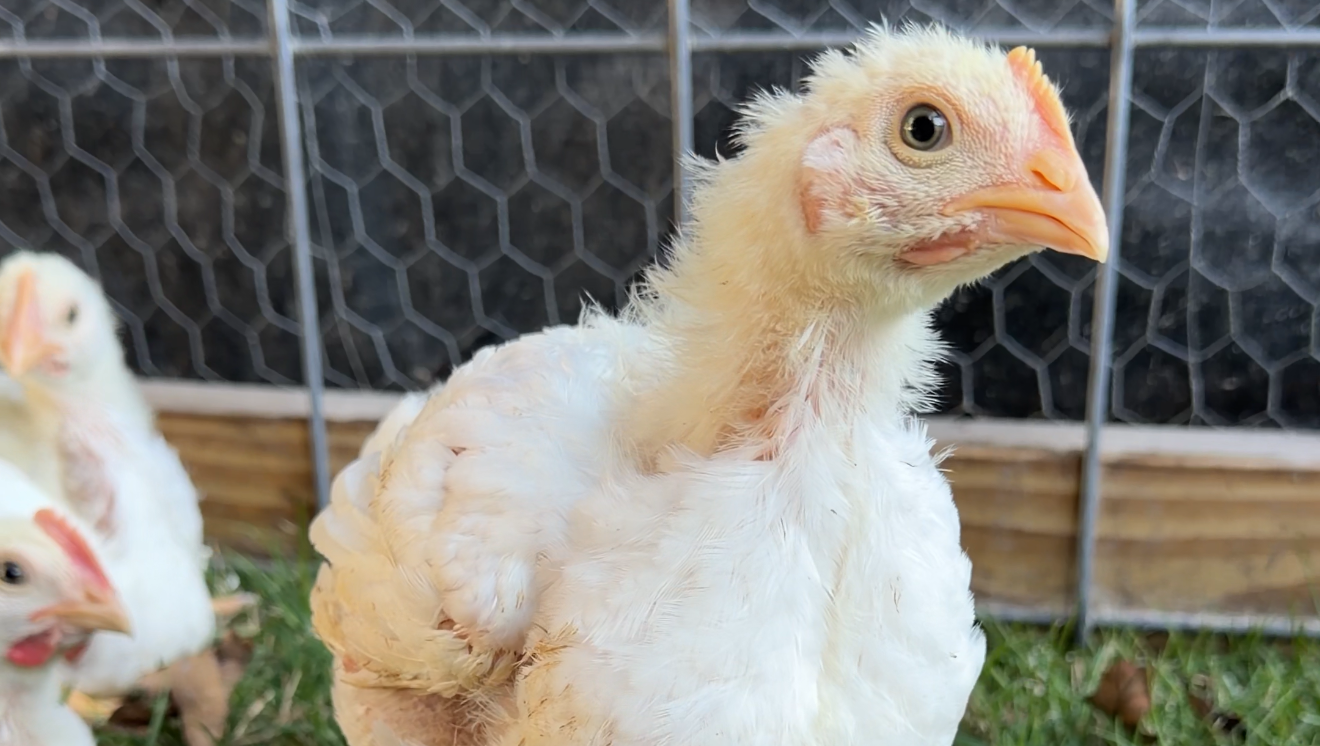
We’re right in the middle of raising our fall batch of meat chickens, and believe it or not, we’re already talking about what we want to do differently next year!
We’ve been raising and processing our own meat chickens for years now, and it’s become such an important part of how we feed our family. We’ve developed a system that works really well for us, but that doesn’t mean we aren’t constantly learning along the way.
In fact, I think that’s one of the things I’ve come to appreciate most about raising our own food. There’s always something new to learn, a tool worth trying, or a small change that makes the process a little easier.
Our overall framework hasn’t changed, but we’re always finding ways to refine the little things.
A Bigger Brooder and a Few More Chickens
One of the biggest changes we made this fall was building a larger brooder and placing it inside our chicken tractor.
Our previous setup worked well for years, but we wanted something that would give our growing chicks more room while keeping them protected. And now that we’ve made that change, we’re already thinking about how we can put that extra space to good use next year.

We’ve decided we’d like to raise a few more chickens with each batch.
Part of that decision comes from the fact that we lost three chicks shortly after delivery this fall. Unfortunately, shipping can be stressful on young chicks, and sometimes losses happen despite your best efforts.
But another reason is simply that we’re eating more chicken!
We typically process our chickens into individual cuts rather than leaving every bird whole. And let me tell you, we go through chicken breasts quickly around here!
So many of our family’s favorite meals call for chicken breast, and it always seems to be one of the first things we run low on in the freezer.
Raising a few additional birds next year will hopefully help us keep more of those cuts on hand throughout the year.
Of course, we’ll still plan around the amount of freezer space we have and how much chicken our family actually uses. But that’s part of the beauty of raising your own meat. You can adjust from one batch to the next based on what your family needs.
Finding Tools That Make Processing Day Easier
Another area where we’re always making little improvements is processing day.
We’ve processed enough chickens over the years to know what works for us, but we’re always researching tools and trying new things that might make the day go a little more smoothly.
Last year, my husband found what has become his all-time favorite knife for dispatching—the Tattle Gear Farmhand Knife. You can use my code ERIKAOBIEDO on your order to save.
It’s one of those tools that has earned a permanent place in our processing setup, and I can see why he loves it so much.

We also invested in a pair of poultry shears, and they’ve been an absolute dream to use. When you’re breaking down multiple chickens into individual cuts, having the right tools makes such a difference.
We have another knife we’re looking forward to trying for evisceration during a future processing day.
That’s something we’ve learned over the years. You don’t necessarily need to overhaul your entire setup to make improvements. Sometimes it’s as simple as finding a better knife, changing the way you organize your workspace, or investing in something that saves you a little time.
Those little things really do add up, especially when you’re processing an entire batch of chickens.
Our Framework Stays the Same
I think it’s important to mention that while we’re always trying new tools and making adjustments, the foundation of how we raise our meat chickens hasn’t changed.
We still follow the same general framework for brooding, feeding, moving our birds onto pasture, and processing.
It’s a system we’ve developed through years of hands-on experience, and it’s one that continues to work well for our family.
What changes are the smaller details.
Maybe we need a little more brooder space. Maybe we decide to raise a few extra birds. Or maybe we discover a new tool that makes processing day easier.
None of those things require us to start over. They’re simply ways we’re making an already established process work even better.
And I think that’s an encouraging thing to remember, especially if you’re just getting started. You don’t have to figure out every little detail before raising your first batch.
You need a solid plan, the right information, and a willingness to learn as you go.
It’s Never Too Early to Start Planning
I know we’re heading into the time of year when most people aren’t thinking about raising meat chickens. But honestly, I think this is one of the best times to start planning for next year.
You have time to research breeds, think about your brooder and housing setup, gather supplies, and decide how many chickens you might want to raise.
And if you’ve already raised a batch or two, this is a great opportunity to think back over what worked and what you’d like to change.
That’s exactly what we’re doing right now.
We’re still caring for our fall flock, but we’re already looking ahead to next year and talking about how we can continue making this process work better for our family.
Raising our own meat chickens has been such a gift to us. Knowing where our chicken comes from, having a freezer stocked with food we’ve raised ourselves, and being able to provide that for our family is something I’m incredibly grateful for.
And it’s something I’d love for more families to experience.
If raising your own meat chickens is something you’ve been considering, you don’t have to wait until spring to get started with the planning.
We’ve put together resources to help families through the process, whether you’re still deciding if raising meat chickens is right for you or you’re ready to get your first batch on the calendar.
Explore Our Meat Chicken Resources
And remember, even after years of doing this, we’re still learning too!
This post contains an affiliate link. I may earn a small commission from your purchase at no additional cost to you.

Leave a Reply